
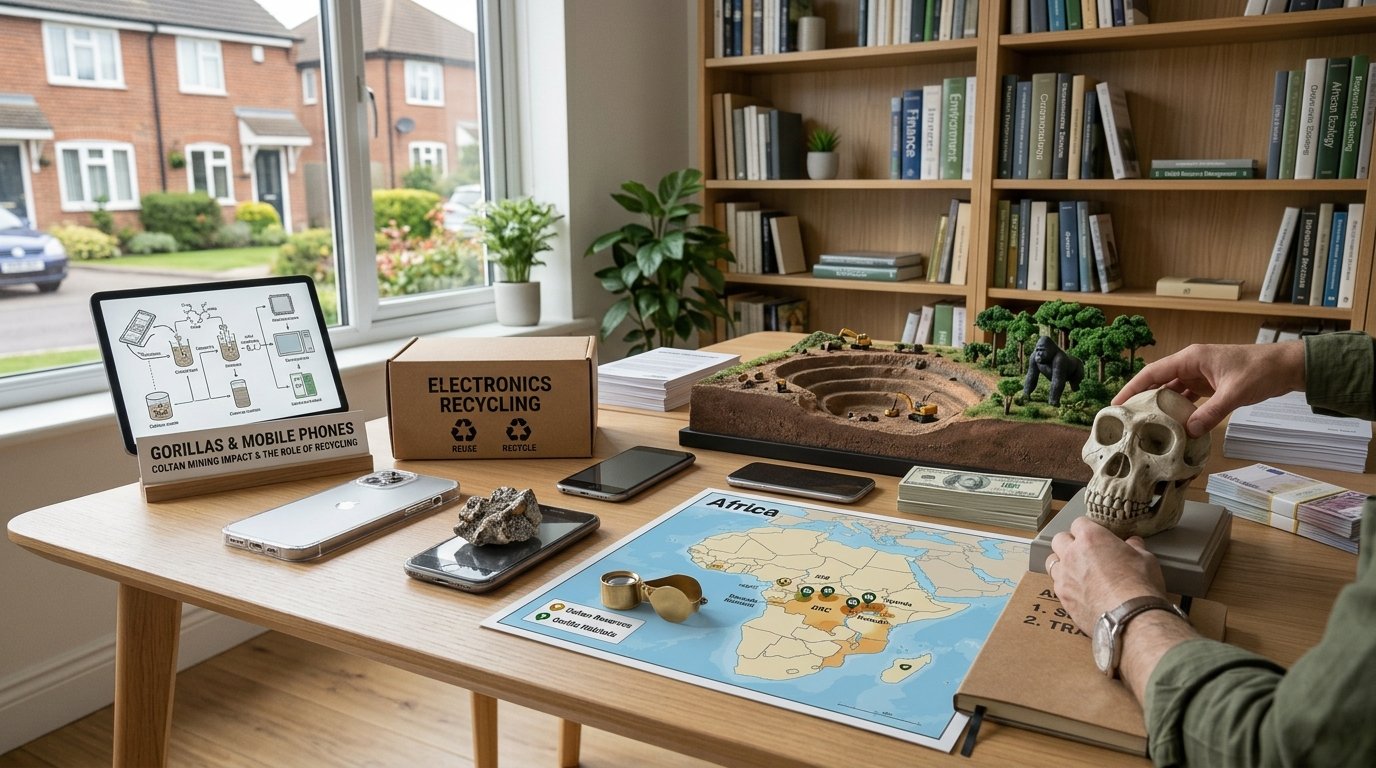
Phones affect gorillas through mining. Coltan, a mineral used in phones and other electronics, is mined in parts of the eastern Democratic Republic of Congo, the home of Grauer’s gorillas. A 2016 report linked artisanal mining, along with war and hunting, to a 77% fall in their numbers.
It is a hard connection to picture from a sofa in Britain. The route from a rainforest to the phone in your pocket is long and tangled, and the story is more complicated than the slogans suggest. Here is what the evidence supports, and what it does not.
What is coltan, and why is it in phones?
Coltan is a dark ore that contains tantalum, a metal used in small electronic parts. The Wildlife Conservation Society describes it as a key mineral used to make mobile phones and other electronics.
Only a tiny amount goes into each handset, and it comes from several countries. Your phone may contain none from Congo at all. The issue is the demand for the material across the whole supply chain, not one particular phone.
What happened to Grauer’s gorillas?
Grauer’s gorillas, the world’s largest gorilla subspecies, suffered a collapse in numbers during two decades of conflict. A 2016 report by the Wildlife Conservation Society and partners estimated that the population fell from about 17,000 in 1995 to about 3,800, a drop of 77%.
| Measure | Figure | Source and date |
|---|---|---|
| Estimated population, 1995 | 17,000 | WCS, 2016 |
| Estimated population, 2016 | 3,800 | WCS, 2016 |
| Estimated decline | 77% | WCS, 2016 |
These are the most recent figures we could confirm from the original report, and they are now a decade old. Mongabay reported that the subspecies was listed as Critically Endangered at the end of 2016.
Is mining the only cause?
No, mining is one of several causes. The WCS report says civil unrest, illegal hunting and mining have all contributed to the loss. The gorillas were hunted for meat, often near mining camps, in a region affected by conflict for years.
That matters for how the story is told. Claiming that your phone directly harms a gorilla overstates the case. A fairer summary is that demand for minerals feeds a system of small-scale mining in a fragile region, and that this has added to the pressure on a species already in trouble.
Does recycling old phones actually help gorillas?
Recycling old phones helps in a small way by reducing demand for new materials, and it can raise money for conservation. It will not solve the problem alone, and honest projects say so.
The best-known example comes from Zoos Victoria in Australia. A study reported by Mongabay looked at its campaign, which collected 115,369 mobile phones between 2009 and 2014. The campaign showed that a clear story could move people to act. Its authors also noted how small that total is against the number of phones retired around the world.
So the value lies in many small actions together. Keeping devices in use for longer, reusing them and recovering their materials all reduce the pull on new mining.
What does reuse do that recycling can’t?
Reuse keeps a working phone in use, so one less new phone needs to be made. Recycling recovers some materials, but it comes at the end of a phone’s life. Reuse delays that point, which is why it sits higher up the list.
WWF-UK makes a similar case. Its guidance on old devices encourages repair, reuse and choosing refurbished phones, and it cites Deloitte research that 24 million unused smartphones were left in UK drawers over three years. Each of those phones holds materials that have already been mined.
Repair and second-hand markets both help here. Services that focus on reusing and recycling old devices keep handsets in circulation, and they deal with broken ones through the proper waste rules.
What can you do with your old phone?
You can help by keeping your phone longer, then making sure it gets a second life. These steps are simple, and they add up across millions of households.
- Keep your current phone for longer. A new battery or screen can often extend its life.
- Consider a refurbished phone next. This avoids the need for a new handset.
- Pass on or sell what still works. Wipe it first, so that the next owner gets a clean phone.
- Recycle what does not. Use a retailer or council site, and never the bin.
- Support conservation directly. Gorilla charities depend on donations, and that money reaches the front line.
A small action with a long reach
The link between phones and gorillas is real, but it runs through conflict, poverty and global demand. One old handset will not change that. Getting it back into use is still an easy, honest step, so check your drawer and give the next one a second life.

Leave a Reply