
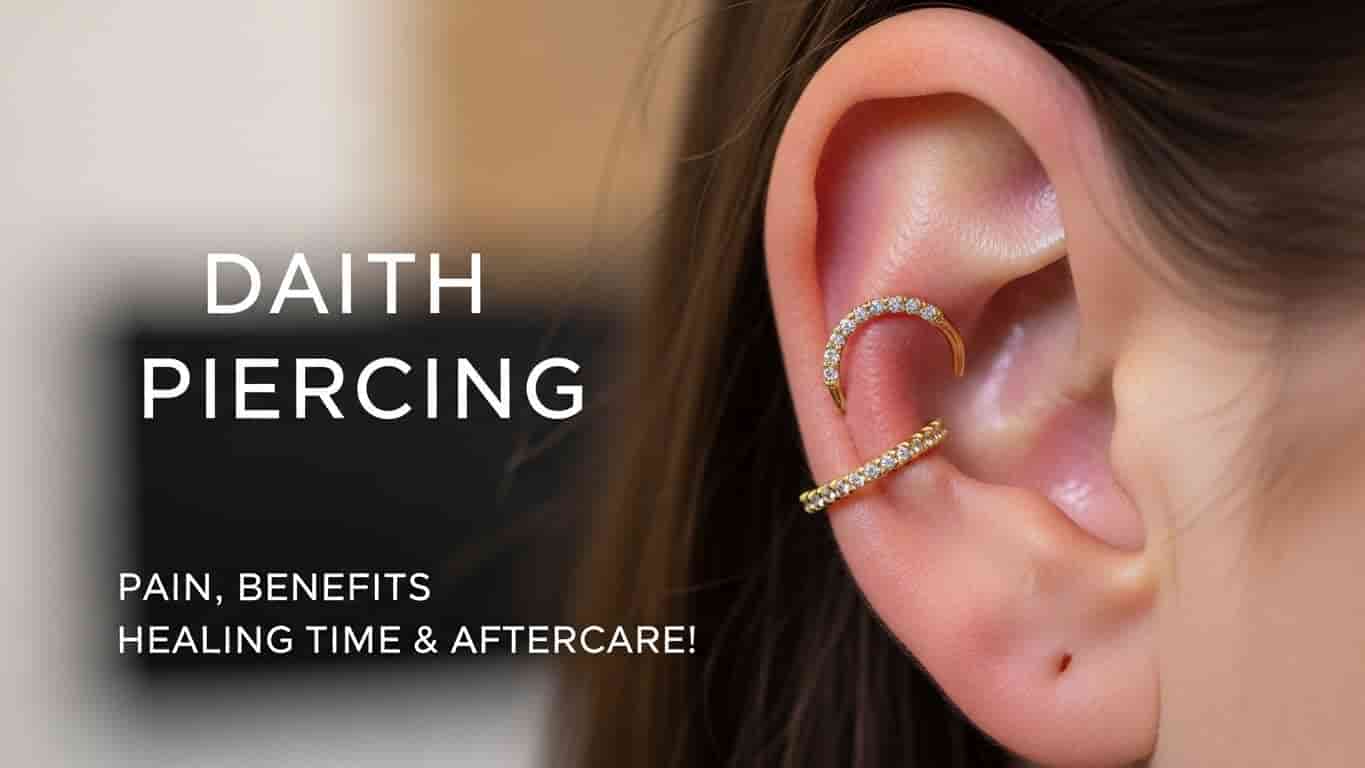
A daith piercing has become one of the most popular ear piercings today. It is stylish, unique, and often linked with potential wellness benefits. People choose it for different reasons—some love the bold look, while others believe it may help with migraine symptoms. This complete guide explains everything you need to know in simple English, including the procedure, healing, care, risks, costs, and common myths.
What Is a Daith Piercing?
Location of the piercing

A daith piercing goes through the inner fold of the ear’s cartilage, just above the entrance of the ear canal. This curved ridge is thick and firm, which makes the piercing look deep and eye-catching.
Why it is popular
It is popular because it looks unique and stands out compared to regular ear piercings. Many people choose it as a way to express their style and personality.
Aesthetic appeal
The daith area naturally frames circular jewelry, making hoops and rings look elegant and neat. It gives the ear a trendy and bold appearance.
Daith Piercing Pain Level – What to Expect
Pain scale overview
On a pain scale of 1 to 10, most people rate a daith piercing between 5 and 7. Because the area has thick cartilage, the sensation can feel sharp and tight for a moment.
Factors that affect pain
- Your pain tolerance
- The skill of the piercer
- The type of needle used
- How calm and relaxed you are during the procedure
Is it more painful than other ear piercings?
Yes, for many people, it is slightly more uncomfortable than lobe, helix, or tragus piercings because of the thicker cartilage. But the pain is quick and lasts only a second or two.
Daith Piercing Benefits
Style & fashion benefits
A daith piercing instantly adds a fashionable look. It is often considered a bold and modern detail that enhances your entire ear styling.
Potential migraine relief claims
Some people say they experienced fewer migraine symptoms after getting a daith piercing. However, doctors have not confirmed this scientifically. It may or may not help, but many people try it for personal comfort.
Pros and cons
Pros:
- Stylish and unique
- Many jewelry choices
- May feel soothing for some migraine sufferers
Cons:
- Longer healing time
- Can be difficult to clean
- Not suitable for everyone’s ear shape
Daith Piercing Procedure Step-by-Step
How the piercer performs it
A professional piercer first examines your ear to make sure the area is suitable. Then they clean and mark the spot. Using a sterilized needle, they carefully pass through the cartilage and insert the jewelry immediately.
Needle vs gun (safe method)
Piercing guns should never be used for cartilage because they can cause unnecessary pressure. A needle is the safe and professional method, as it is accurate and gentle on the tissue.
Time required
The actual piercing takes only a few seconds, while the entire appointment may take around 10–15 minutes.
Also read:Community Dedicated to Promoting Holistic TheHealthyPrimate!
Daith Piercing Healing Time
Average healing duration
Daith piercings usually take 4 to 6 months to heal. Some people may take a little longer depending on care and body response.
Stages of healing
- Early stage (0–4 weeks): Initial tenderness and slight swelling
- Middle stage (1–3 months): The piercing becomes more stable
- Late stage (3–6 months): Full healing with improved comfort
Signs of healthy healing
- Reduced tenderness
- Skin looking calm
- No unusual discharge
- Jewelry moving slightly without pain
Daith Piercing Aftercare Guide
Cleaning routine
- Clean twice a day with a gentle saline solution
- Use a clean tissue or cotton pad
- Keep the area dry after cleaning
What to avoid
- Avoid touching the piercing unnecessarily
- Avoid sleeping directly on that side
- Avoid twisting or rotating the jewelry
- Avoid makeup or creams near the piercing
Common mistakes
- Using alcohol or hydrogen peroxide (too harsh)
- Changing jewelry too early
- Skipping cleaning routines
Possible Risks & Complications
Infection risk
If not cleaned properly, the area can become irritated or infected. Keeping hands clean and avoiding unnecessary touching helps prevent this.
Swelling & irritation
Mild swelling or redness is normal in the beginning, but gentle care usually helps it settle.
Jewelry rejection or keloids (safe, non-graphic explanation)
Sometimes the body may not accept the jewelry well, causing the area to become irritated. A professional piercer can guide you if this happens.
Best Jewelry Options for Daith Piercing
Hoops, rings, clickers

These are the most common and attractive jewelry styles for daith piercings. They fit naturally into the curved area of the ear.
Ideal materials: titanium, gold, surgical steel
High-quality materials reduce irritation and help your piercing heal faster. Titanium and real gold are the safest long-term choices.
Daith Piercing Cost
Average cost range
The cost usually ranges between $30 to $90, depending on the place and jewelry quality.
What affects pricing
- The piercer’s experience
- The studio’s reputation
- The jewelry material
- Your location
Does location matter?
Yes, big-city studios usually charge more, while smaller towns may have lower prices.
Daith Piercing vs Other Ear Piercings
Difference from rook, tragus & conch
- Rook: Above the daith, in the upper cartilage fold
- Tragus: On the small flap in front of the ear canal
- Conch: The middle bowl-shaped part of the ear
Which one suits your ear anatomy?
Everyone’s ear shape is different. A professional piercer can check whether your daith area has enough space for a safe and comfortable piercing.
Tips to Choose a Professional Piercer
Certification & hygiene
Choose someone who follows safe hygiene, uses sterilized tools, and has proper certification.
Experience with cartilage piercings
Cartilage requires skill. Make sure the piercer has experience specifically with daith and other inner-ear piercings.
Studio safety checks
The studio should look clean, organized, and professional. Fresh gloves, sealed needles, and proper cleaning are must-haves.
Also read:BlogzTheHealthyPrimate.org
Who Should Not Get a Daith Piercing?
Medical or skin conditions where piercers avoid piercing
If you have certain skin conditions or healing problems, some piercers may recommend avoiding cartilage piercings.
Cartilage suitability
Not everyone has the right shape of inner cartilage for a daith piercing. The piercer will check this before starting.
Age considerations (general info only)
Some studios have their own age rules for safety. Always follow local guidelines and professional recommendations.
Daith Piercing Side Effects
Normal after-effects: mild redness, slight tenderness
These are common and usually improve within a few weeks.
Signs when professional help is needed
If the area becomes extra swollen, painful, or looks unusual, a piercer or healthcare professional can guide you.
Safe, simple explanation only
Most issues are minor and can be corrected early with proper care.
Daith Piercing Myths vs Facts
Migraine-relief truth vs belief
Some people feel relief, but it is not medically proven. It may help some individuals while having no effect for others.
Healing misconceptions
Many think daith piercings heal quickly, but cartilage always needs extra time and care.
Jewelry myths vs reality
Some believe heavier jewelry heals faster, but that is not true. Lightweight, high-quality jewelry is better in the beginning.
FAQs About Daith Piercing
1. Does a daith piercing hurt a lot?
Most people feel a quick, sharp sensation. On a scale of 1–10, it usually ranks between 5–7.
2. How long does a daith piercing take to heal?
It normally takes 4 to 6 months, but healing can be slower for some people.
3. Can a daith piercing help with migraines?
Some people report relief, but there is no medical proof. It may help some individuals and not others.
4. Which jewelry is best for a new daith piercing?
Titanium, surgical steel, or real gold hoops and clickers are the safest options.
5. Can I sleep on my daith piercing?
It’s better to avoid sleeping on that side to prevent irritation and delay in healing.
6. When can I change my daith jewelry?
Only after the piercing is fully healed, usually after 4–6 months, and preferably with a piercer’s help.
Conclusion:
A daith piercing is a stylish and unique choice that gives your ear a bold and modern look. While the procedure involves piercing thick cartilage, the pain is quick and manageable for most people. With proper aftercare, good hygiene, and patience during healing, this piercing can stay comfortable and beautiful for a long time. Always choose a professional piercer, follow safety guidelines, and understand both the benefits and limitations before getting one. If done responsibly, a daith piercing can be a safe and attractive addition to your ear styling.
Related post:

Leave a Reply